What ΔE2000 means for miniature paints
How to read a score, why ≤5 is a shortlist rather than a guarantee, and what a screen swatch leaves out.
Read the ΔE2000 guideConcise answers first, then the colour science, paint behaviour, and practical checks that make a conversion usable at the painting desk.
How to read a score, why ≤5 is a shortlist rather than a guarantee, and what a screen swatch leaves out.
Read the ΔE2000 guideFrom stored sRGB hex values to Lab and CIEDE2000, including strict behaviour families and correction paths.
See the matching pipelinePreserve the role of each step, shortlist by colour, then test finish, opacity, and undercoat.
Translate a recipeWhy finish, coverage, opacity, washes, transparent paints, and metallics change the result.
Compare paint behaviourIdentify the exact product, choose a same-role candidate, and validate it on the intended miniature.
Find a discontinued-paint replacementBuild a normalized shelf list, migrate an existing tracker safely, and use ownership in substitutions.
Organize your collectionThe public BrushForge catalogue snapshot dated 10 July 2026 contains 2,941 paint records across eight brands. Its behaviour families contain 2,154 opaque, 274 metallic, 301 single-coat, 148 wash, 42 ink, 10 glaze, and 12 other translucent records. A compatible match must stay inside the source family; a different translucent family can appear only as a clearly warned colour reference.
The native app catalogue is broader and is described as 4,300+ paints. The public web count and app count refer to different product surfaces; they should not be compared as if every record and workflow is identical.
Review the public methodology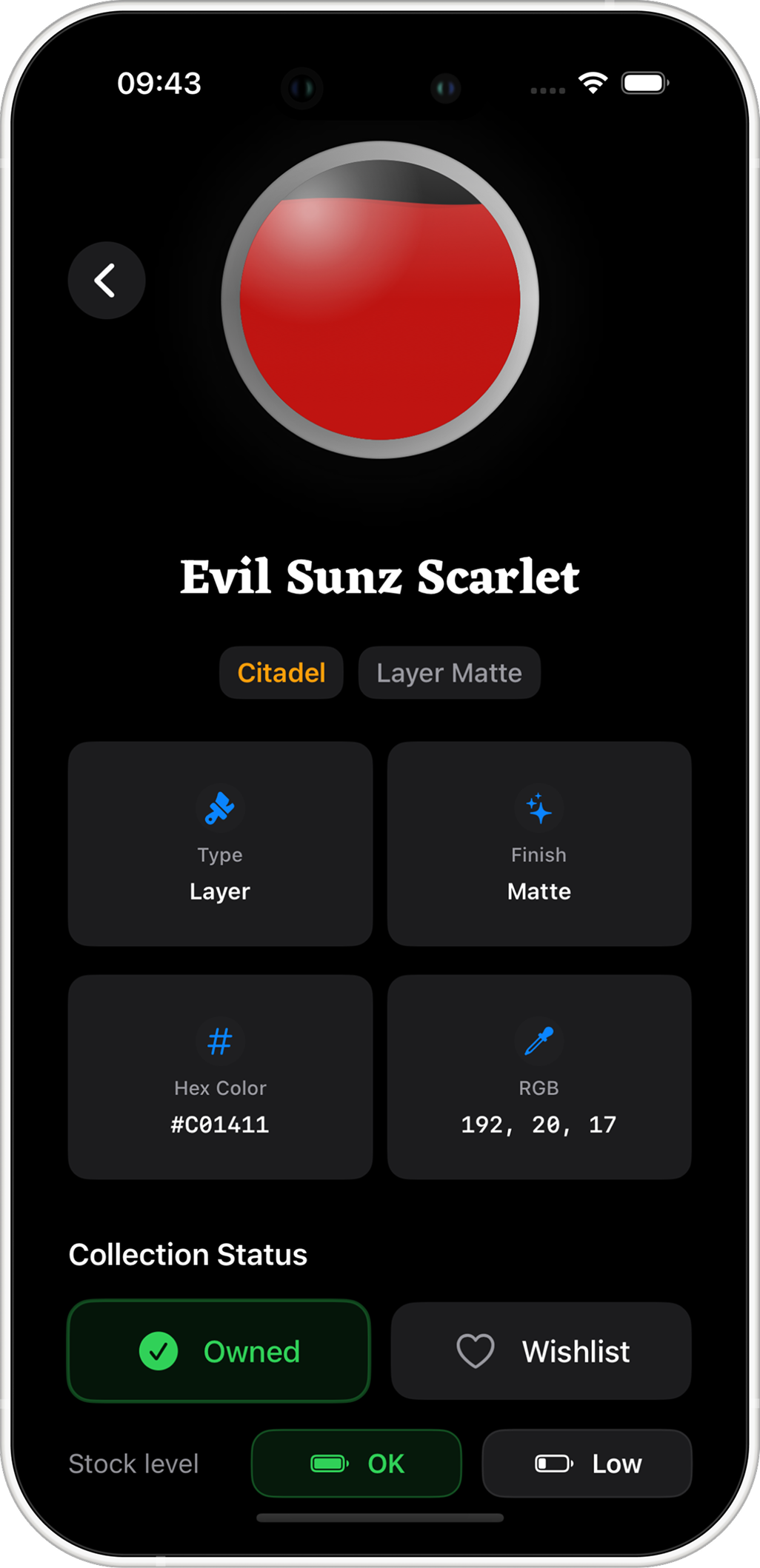
Try a public conversion, browse the paint catalogue, or use the native app to connect a result to your owned paints, recipes, and projects.